
Sluggish rural demand along with higher inflation is set to mute revenue growth of the fast-moving consumer goods (FMCG) sector at 7-9 per cent this fiscal and the next compared to 8.5 per cent in the previous fiscal, a report said. Almost 40 per cent of the Rs 4.7-lakh-crore sector come from the hinterland markets, which have been hit by high inflation, low wages and high job losses since the Covid pandemic. Revenue growth of the FMCG sector will be muted at 7-9 per cent this fiscal and the next compared to 8.5 per cent in the last, while volume growth will be just about 1-2 per cent, down from 2.5 per cent last fiscal, Crisil said in a report on Monday.

While companies have not launched too many products in rural areas of late, easy financing has helped push up demand.
The highlights of RBI's bi-monthly monetary policy announced by Governor Shaktikanta Das:

The supply chain for fast-moving consumer goods (FMCG) companies is seeing congestion due to persistently low demand. This has led to an increase in inventory days, with stocks accumulating at distributors and compelling them to extend higher credit periods to retailers. Distributors, Business Standard spoke to, revealed that demand inventory days have more than doubled in some cases, forcing them to offer credit terms as long as 45 days to retailers, as consumer offtake continues to face pressure.

'Investors who remain calm, consistent, and disciplined through short-term volatility are usually the ones who benefit most in the long run.'

Amazon India has launched Amazon Diagnostics, an at-home healthcare service that allows customers to book lab tests, schedule appointments and receive digital reports directly via the Amazon app. Initially available in six cities-Bengaluru, Delhi, Gurgaon, Noida, Mumbai and Hyderabad-the service covers more than 450 PIN codes and offers access to over 800 diagnostic tests.

The Congress party in India has accused the ruling Bharatiya Janata Party (BJP) of being "anti-Dalit" after a BJP leader sprinkled Ganga water at a Ram temple in Rajasthan to "purify" it following the visit of a Dalit Congress leader. The incident has sparked outrage among the Congress, with party leaders calling it an insult to Dalits and a reflection of the BJP's alleged casteist ideology.

Indian economy is in a sweet spot, with a mix of solid growth and moderating inflation, Moody's Ratings said, forecasting a 7.2 per cent GDP growth in the 2024 calendar year and 6.6 per cent in the next. In its Global Macro Outlook 2025-26, the rating agency said the global economy has shown remarkable resilience in bouncing back from supply chain disruptions during the pandemic, an energy and food crisis after the Russia-Ukraine war began, high inflation and consequent monetary policy tightening.

India is likely to grow by 7.5 per cent in the first quarter of the current financial year, driven by rising aggregate demand and non-food spending in the rural economy, according to an article in the RBI's May Bulletin released on Tuesday. The Indian economy has demonstrated marked resilience in the face of geopolitical headwinds impacting the supply chain, said an article on the state of the economy published in the May Bulletin.

Hindustan Unilever's Q3FY24 performance was lacklustre, with both sales and operating profit barely moving from the year-ago period due to price cuts and higher advertising costs. Besides weak demand, the FMCG (fast-moving consumer goods) major is facing increased competitive pressures, particularly from regional players, which, coupled with a slow recovery in rural markets, could put revenues under pressure going forward. Margins are expected to remain range-bound as benefits from falling raw material costs are expected to be neutralised by rising promotional budgets.

The total vehicle retail sales in India witnessed a 32 per cent on-year rise in October to 28,32,944 units with all segments including two-wheelers and passenger vehicles registering strong growth, Federation of Automobile Dealers' Association (FADA) said on Wednesday. The total vehicle retail sales in October 2023 stood at 21,43,929 units, as per FADA. The strong growth in October this year was largely driven by the rural market, especially boosting two-wheeler and passenger vehicles sales, supported by increased Minimum Support Price (MSP) for Rabi crops, FADA said.

Finance Minister Nirmala Sitharaman is likely to hold pre-budget consultations with industry chambers on June 20, sources said. The budget for 2024-25 fiscal is likely to be presented in Parliament in the second half of July. Industry sources said the pre-budget consultation with Sitharaman would be preceded by a meeting with Revenue Secretary Sanjay Malhotra on June 18.

If the forecast materialises, it would mean the fourth successive quarter of economic growth below 5 per cent.
Changing aspirations and strong rural demand could explain why core inflation may not decline fast enough.

The July-September quarter (Q2) results for 2024-25 (FY25) from the largest listed consumer electrical solutions companies, Havells India and Polycab India, followed similar trends, demonstrating robust revenue growth while falling short of profitability expectations. Both companies witnessed overall growth in the 16-30 per cent range, but margins declined by 130-290 basis points (bps) year-on-year (Y-o-Y). Although brokerages are bullish on long-term prospects and have raised revenue projections, earnings forecasts have been revised downward due to margin pressures.

Acceleration in demand, together with marginal price hikes of about 2-3 per cent by cement companies in the October-December quarter (third quarter, or Q3) of 2022-23, may not be enough to cushion the impact of high input costs on the bottom line, reveal Bloomberg consensus estimates for the quarter. Year-on-year (YoY) net sales growth in Q3 will come in at nearly 7 per cent, shows Bloomberg data, while bottom-line growth will show a sharp decline of 25 per cent from a year ago. The earnings before interest, tax, depreciation, and amortisation (Ebitda) will likely decline by nearly 5 per cent versus a year ago, shows data.

The World Bank on Tuesday raised the growth forecast for the Indian economy to 7 per cent for the current fiscal year on the back of recovery in agri sector and rural demand. World Bank had in June projected India to grow at 6.6 per cent for FY24. According to the World Bank Report released on Tuesday, India's growth continues to be strong despite a challenging global environment.

The Indian economy could remain less affected by global trade wars than other countries because the two engines of domestic growth - consumption and investment - are likely to face a limited impact from such headwinds, according to an article on the 'State of the Economy' in the Reserve Bank of India's (RBI's) bulletin, released on Tuesday.
Fast-moving consumer goods (FMCG) sales continued to be lower in June compared to May with urban sales witnessing a steeper decline than rural. Sales of goods from shampoos to biscuits stayed lower due to inflationary pressures on commodities. This pushed consumer companies to continue taking price hikes, thus impacting demand, according to data by Bizom.

As rural demand tapers, companies are back at the drawing board, firming up plans to beat the unexpected slowdown in sales.

'On the governmental level, we are saying all the right things, like beti bachao, beti padhao. Yet, a High Court judge in Prayagraj, who is highly educated, has studied the Constitution and its laws, says breaking the naada of a pyjama or touching the breasts of a minor girl is not part of the reform process. Just giving lip service is not enough, the general mindset has to change.'

Maharashtra has witnessed 823 incidents of communal unrest since January this year, with demands for the removal of Aurangzeb's tomb and the spread of distorted facts on social media fomenting fresh trouble. Districts like Nandurbar, Pune (Rural), Ratnagiri, Sangli, Beed, and Satara have seen communal unrest in recent days due to right-wing organizations' demands for the demolition of the Mughal emperor's tomb in Chhatrapati Sambhajinagar. The state witnessed 4,836 Hindu-Muslim related communal crimes in 2024, with 170 incidents classified as cognisable and 3,106 as non-cognisable cases. The violence in Nagpur, triggered by protests demanding the removal of Aurangzeb's tomb, highlights the role of social media in spreading inflammatory content and instigating people. While the state has taken measures to curb the spread of misinformation, concerns remain over the impact on communities and the need for promoting peace and understanding.

Hindustan Unilever Ltd, India's largest personal care product maker, on Tuesday reported a better-than-expected increase in its September quarter net profit and revenues, signalling a revival of demand following the world's biggest lockdown.

Gold jewellery demand in India is likely to decline in the second and third quarters of this fiscal due to hike in import duty, high volatility in prices and inflationary pressure, according to a report. While demand is likely to contract by 8 per cent year-on-year in the second quarter of FY23, the decline is expected to be higher at 15 per cent in the third quarter due to the exceptionally high base in the same period of FY22, Icra said in a report. According to the report, the exceptional third quarter performance in FY22 was due to the post-Covid reopening of the economy and the substantially high demand in the wedding and festive seasons.

Claiming taxes collected from the south were being distributed to north India and that the former were not getting their due share, Congress MP D K Suresh on Thursday said the southern states will be forced to demand for a separate nation if the 'injustice' was not rectified.

Mahindra & Mahindra (M&M) delivered a stronger-than-expected operational performance in the October-December quarter (Q3) of 2024-25 (FY25), driven by solid growth in its automotive (auto) and farm equipment segments. Higher volumes improved operating leverage, expanding margins.

The paint sector is seeing heightened competition with the entry of deep-pocketed groups like Aditya Birla and JSW. However, some brokerages see an opportunity in select stocks.

It will be the second Budget of the Modi 3.0 government and eighth straight Budget for Nirmala Sitharaman, rare in Indian polity.

The risk-reward for the Indian markets, Morgan Stanley said, is turning favourable.

'Future market gains will likely depend primarily on earnings growth.'
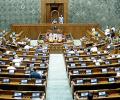
Bharatiya Janata Party on Thursday issued a three-line whip to all of its Lok Sabha MPs asking them to be present in the House for the passing of the Union Budget 2025-26.

Major two-wheeler (2W) manufacturers in India witnessed a single-digit decline in domestic sales in November after dispatches had picked up in October for the festive season when wholesales went up by 14 per cent and retail also grew by 36 per cent.
Demand for fast-moving consumer goods (FMCGs) went up last month across India, as kirana stores stocked up their shelves in anticipation of a sizzling summer, according to data by retail intelligence firm Bizom. There was a spike in beverages sales across the country despite inflation inching up in February after moderating downward previously, Bizom noted.
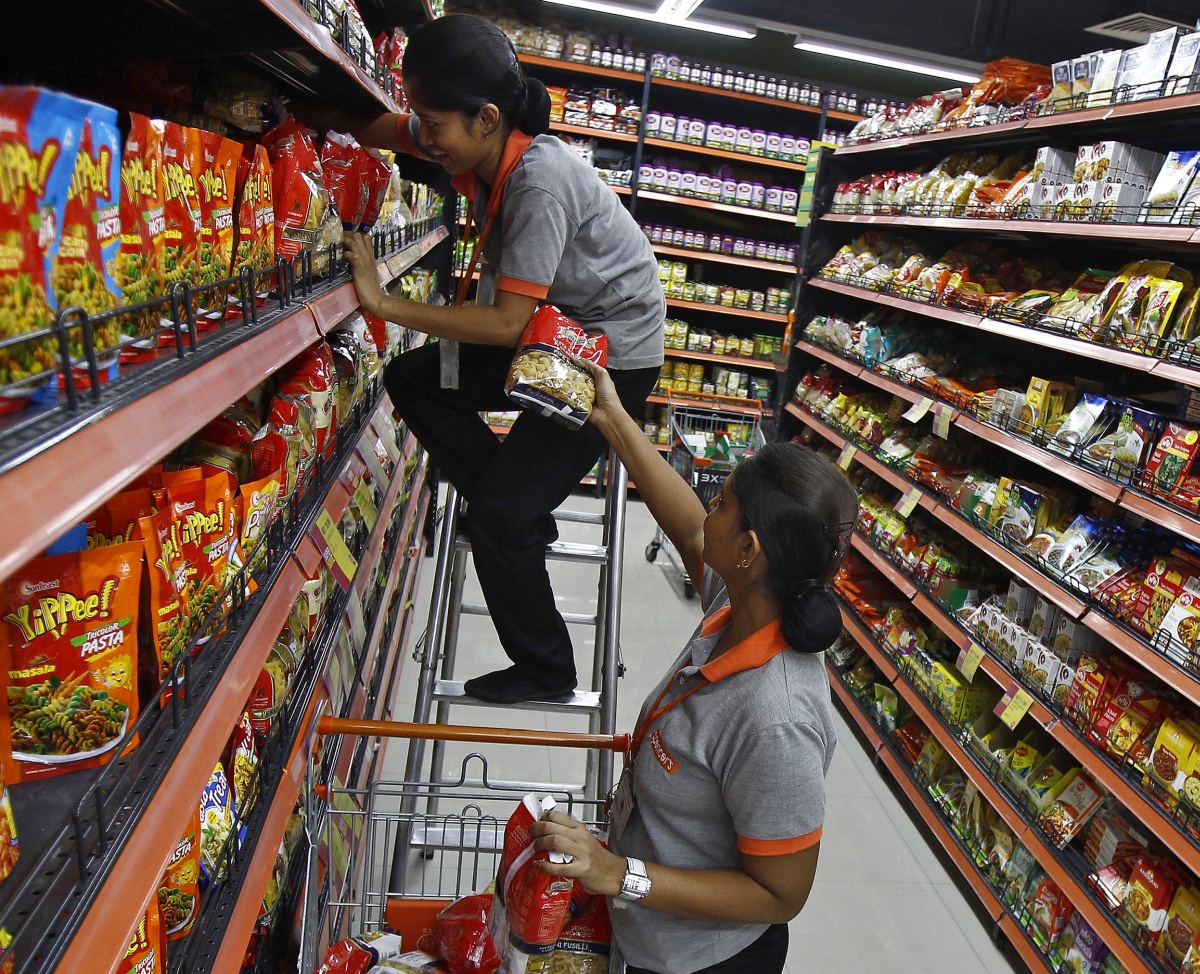
However, rural demand continued to remain a concern for FMCG companies during the quarter.

India will be the world's third-largest economy by 2028 as it becomes the world's most sought-after consumer market and gains share in global output, driven by macro stability influenced policy and better infrastructure, Morgan Stanley said. From a $3.5 trillion economy in 2023, the Indian economy is projected to expand to $4.7 trillion in 2026, which will make it the fourth largest in the world behind the US, China and Germany.

Gold, a safe-haven bet, is likely to continue its record-smashing journey in the New Year, rising to Rs 85,000 per 10 grams and even Rs 90,000 level in domestic markets if geopolitical tensions and global economic uncertainties continue.

10 largecaps stocks which stand to gain from the Budget.

Fitch Ratings on Tuesday raised India's growth forecast for the current fiscal to 7.2 per cent, from 7 per cent projected in March, saying elevated consumer confidence will drive spending, besides increased investments. In June update to its global economic outlook report, Fitch said it expects inflation to decline to 4.5 per cent by end of this year and RBI to cut policy interest rates by 25 basis points to 6.25 per cent.

Indian passenger vehicles market registered record wholesales of 43 lakh units in 2024, with companies like market leader Maruti Suzuki, Hyundai, Tata Motors, Toyota Kirloskar Motor, and Kia posting their best-ever annual domestic sales. The continued growth of SUVs, along with rural markets playing a key role in driving up car sales, helped the industry better the previous best of nearly 41.1 lakh units posted in 2023.

The Indian economy is likely to post better than anticipated growth in the second quarter (July-September) owing to robust urban consumption and expansion in services, a Business Standard analysis of high-frequency indicators showed. While gross domestic product growth in the September quarter is expected to come below the 7.8 per cent print in the June quarter due to a favourable base fading, analysts say the print will be much closer to 7 per cent than the 6.5 per cent anticipated earlier. While the Reserve Bank of India (RBI) had estimated 6.5 per cent growth for July-September, last month Governor Shaktikanta Das said the growth figure would surprise on the upside.
